The Treatment and Importance of Color in the Impressionism and Postimpressionism Art Periods
Mail-impressionism art move, like the Impressionism, is considered to be one of the primeval advanced movements of the 19th century. The concerns of the major and most influential painters and sculptures that helped to create the impressionism fashion produced the works that focused on the investigation of the perception of the eye, the presentation of the shifting nature of light, and the depictions of the everyday life in the streets, parks, cafés, and confined. But, what is Post-Impressionism? Following from the predecessors of the Impressionism movement, Postal service-Impressionism was the adjacent generation of the avant-garde artists that took a variety of unlike approaches, only what glued them together was their rejection of the focus on the opticality of the Impressionism movement. Emerging as a reaction against the Impressionists' business organization for the naturalistic delineation of light and color, Post-impressionists fought to bring dorsum the focus on the subject field matter and the construction in paintings that they felt was lost. Dominated by the immense personalities, such every bit Paul Gauguin, Paul Cézanne, Georges Seurat, Vincent van Gogh, and Henri de Toulouse-Lautrec, the Post-impressionists took different approaches and continued building on the advances of the previous art movement.
The Elements of Post-Impressionism Fine art
Breaking away from the naturalism of Impressionism and focusing their art upon the subjective vision of the artists, rather than following the traditional role of the art as a window onto the globe, artists of the Post-Impressionism movement focused on the emotional, structural, symbolic, and spiritual elements that they felt was lacking from Impressionism. The 'depiction of the passing moment' of impressionism paintings, such as the painting series of Claude Monet, for the emerging new authors, created the paintings that lacked structure. Attempting to assault this event, the Post-Impressionism fine art movement seems to exist divided into two major streams of idea.
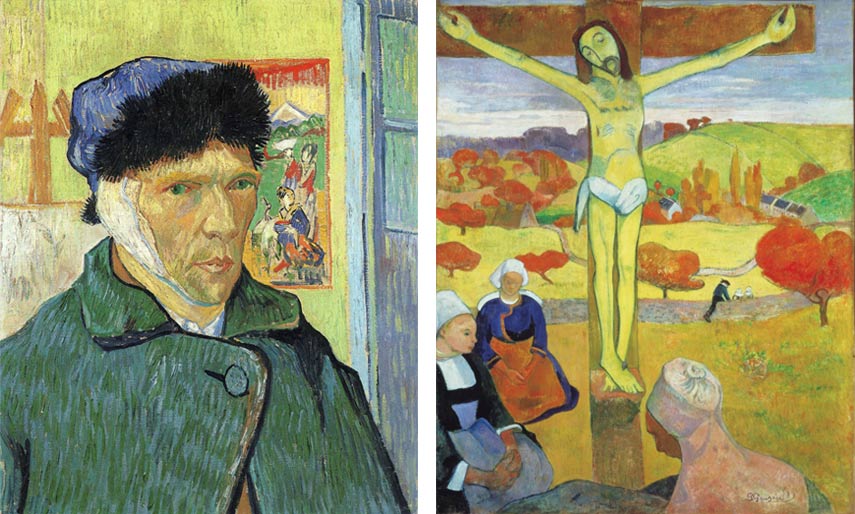
Similarly to the previous division of the Neo-Classical and Romantic art, the division of Post-Impressionism movement also existed onto a more structural, formal, nearly scientific blueprint style of artist Georges Seurat with his dot theory, afterwards known as pointillism and Paul Cézanne, who concentrated his practice on the research of the color planes, while on the other, the art of French painter Gauguin, van Gogh, and Toulouse-Lautrec emphasized the expression of emotions and sensations through lite and color. Out of these two trends of Mail-Impressionism art, emerged the extremes of the individual styles of the 20th-century art, ranging from Cubism to Surrealism.
The Different Approaches, Concepts, and Styles
The earliest indication of the new trend that broke with Impressionism was the painting style of Georges Seurat. He adult a style of painting known as Pointillism, which refers to the use of a betoken or dot every bit the basis for the construction of a painting. His method of painting, scientifically thought after, following a rigorous design design and employing even one of the oldest compositional tools, the golden section, kept the bright and unmixed color scheme of the Impressionism paintings and open-air themes but added a pattern based on geometrical shapes. The perfectly counterbalanced compositions of Seurat's paintings differ immensely from the vibrant and screaming paintings of Vincent van Gogh. Attempting to express the deepest emotions, and the expressions of his tormented soul, van Gogh's paintings relied upon the saturated colors and broad brushstrokes to evoke the inner turmoil of the artist. Both van Gogh and Paul Gauguin rejected the ' abominable error of naturalism' in favor of a more than personal, spiritual expression.
" I dream of painting and so I paint my dream." - Vincent van Gogh
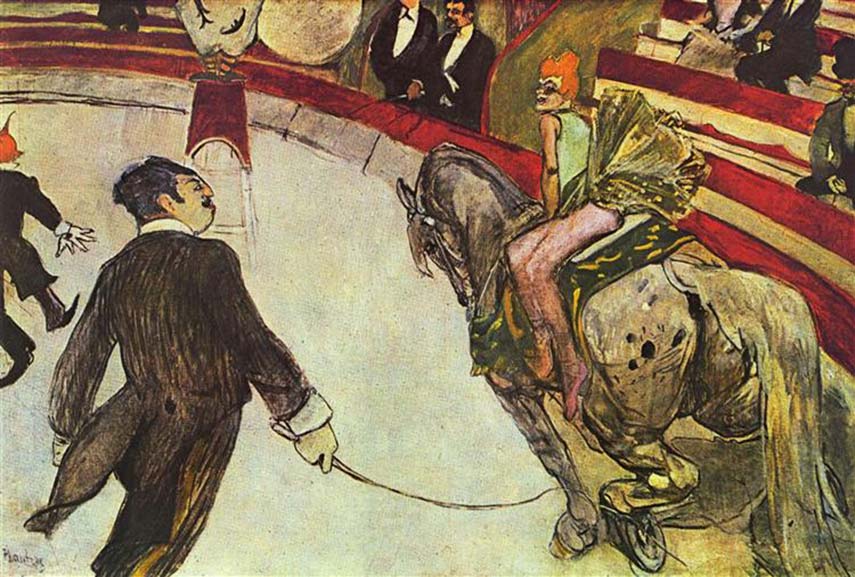
Van Gogh and Gauguin shared an interest in symbolic content and produced images that were subtracted from their natural appearances, where the artist's feelings nigh the subject affair, and his views on the aesthetic consideration of color, line, and course, were the most crucial elements for the creation of their paintings. Van Gogh was too influenced by a multifariousness of sources, and his love of the stylized representations of Japanese woodblock prints was also evident in the work of Henri de Toulouse-Lautrec, whose unique depictions of the Parisian nightlife resulted in paintings and lithographs that were congenital with the strong outlines and apartment planes of color of the Japanese woodblocks.
Cheque out more than works by Gauguin on our marketplace!
What Nosotros Owe to Post-Impressionism
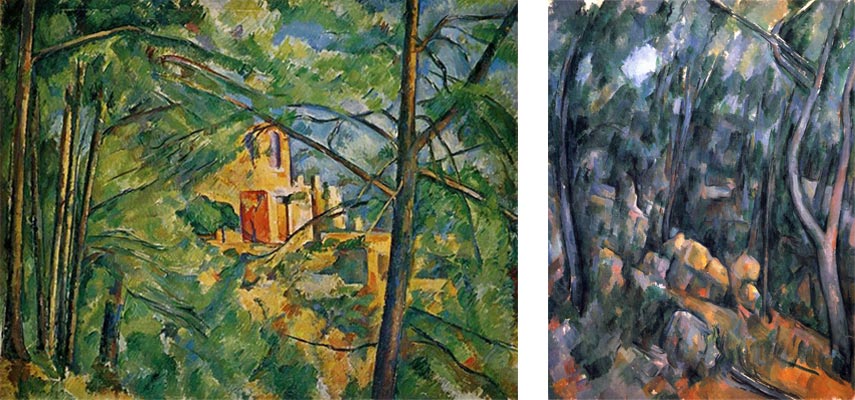
Near consider the investigation of the pictorial form and the exploration of the underlying formal structure of the bailiwick matter depicted, that formed the practice of Paul Cézanne, equally the most important and influential heritage that followed from the movement. His ideas that the simplest geometrical shapes form the underlying structure of whatsoever subject matter glued Post-Impressionism and Cubism, and were immensely important for the influential artists of modernity, such as Henri Matisse and Pablo Picasso, who even went so far equally to telephone call Cézanne " the male parent of us all". This link was non the simply one since the aesthetic touch on of the motility influenced also Expressionism and Fauvism as well. Some would even get in to say that the contemporary movements that are identity-based, such as Feminism art, could be linked besides due to the major business of the artists on their own personal styles and individualism, where the paintings were seen to stand for a window into the creative person's listen and soul.
The early focus on abstract patterns, geometrical shapes, and structure on one side influenced the birth of Cubism and Abstract art and the importance of the individual, helped to shape the Expressionism and even the Abstract Expressionism works. Currently, in the broad spectrum of works that create the contemporary art, the heritage of the Mail-Impressionism is not something that could be dismissed. The major trends today, still experiment with color, form, pictorial planes, and we are witnesses to the rising of geometrical abstract works. The need for experimentation and the re-definition of everything stands at the base of contemporary art today and stood at the base of the Post-Impressionism fine art equally well.


Focusing on the history and the major developments of the Post-Impressionism movement, the book is an excellent guide into the world of the major art figures and the major works produced. The book is an introduction to the Mail service-Impressionism of the 1880s and 1890s and it explores the movement through the investigation of the major exhibitions, themes, theories and it even focuses on the individual characters of the major figures.
All images used for illustrative purposes merely. Featured images in slider: Georges Seurat – A Dominicus on La Grande Jatte. Captions, via Creative Commons; Vincent van Gogh – Starry Dark Over the Rhone. Captions, via Creative Commons; Paul Cézanne - Rideau Cruchon et Compotier, particular. Paradigm via mostfamousartwork.blogspot.com; Henri de Toulouse-Lautrec – In Bed The Osculation, detail. Image via totallyhistory.com
highsmithapereens.blogspot.com
Source: https://www.widewalls.ch/magazine/what-is-post-impressionism
0 Response to "The Treatment and Importance of Color in the Impressionism and Postimpressionism Art Periods"
Post a Comment